XLAM Dolomiti
Italian manufacturer of CLT (X-Lam) from Trentino with ETA, CE marking and a verified carbon-negative EPD.

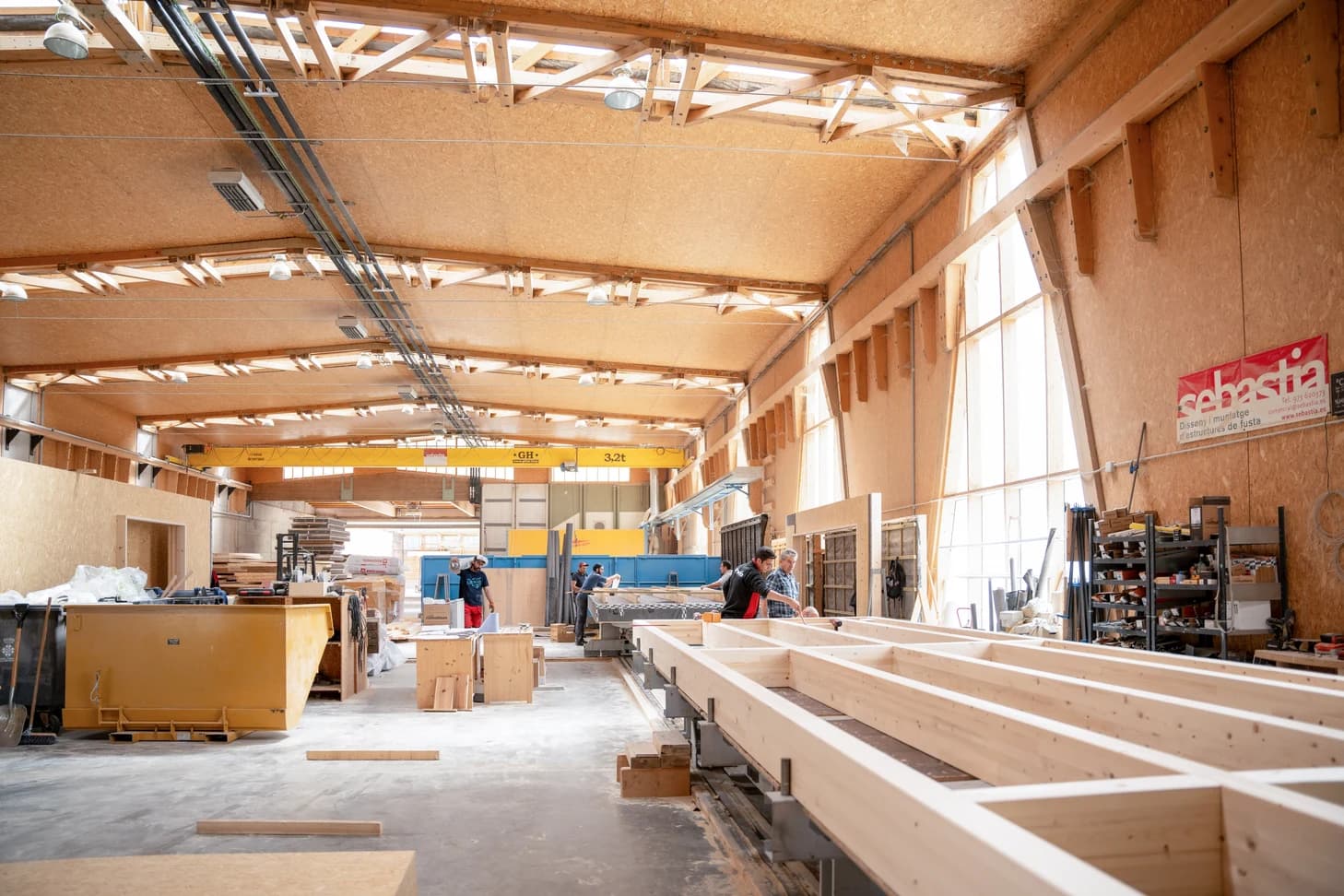
Italian manufacturer of cross-laminated timber (CLT/X-Lam) panels based in Trentino, with over 30 years producing X-Lam panels. It offers design, engineering, supply and installation of timber construction systems for large-scale residential, commercial and industrial buildings. Its panels hold ETA and CE marking, certification from the French CSTB, and a verified Environmental Product Declaration (EPD International). The timber comes from forests with PEFC-certified sustainable management, and its EPD documents carbon-negative performance in the manufacturing phase.
Because its CLT doesn't just replace concrete structure but comes with a verified EPD that certifies carbon-negative performance cradle to gate (-675 kg CO2eq/m3): timber that decarbonises with defensible figures, not slogans.
Chosen by Descarboniza. No company pays for what we say about it.
Go to their website454kg/m³
The manufacturer declares it holds an Environmental Product Declaration, but Descarboniza does not hold the document and has not read it. If this entry shows a carbon figure, it comes from the entry, not from a declaration we have verified.
855kg/m³
Declarada
EPD International (The International EPD System), nº EPD-IES-0019455, válida hasta 2030-04-24. Unidad declarada: 1 m3 de XLAM/CLT (densidad 454 kg/m3). GWP-Total A1-A3 = -675 kg CO2 eq./m3 (suma A1 -771 + A2 19,4 + A3 76,5). Carbono biogénico almacenado en el producto: 855 kg CO2/m3 (233 kg C/m3).
Claim your listing: add your EPD, stand out in the comparator and appear right where the technician chooses the material.
Upgrade your listingTechnical questions and answers
- What is the carbon footprint (GWP) of XLAM Dolomiti?
- XLAM Dolomiti declares a GWP (A1–A3) of -675 kg CO₂e/m³.
- What is the density of XLAM Dolomiti?
- XLAM Dolomiti has a declared density of 454.
- Is XLAM Dolomiti a carbon-negative material?
- Yes. The biogenic carbon stored in XLAM Dolomiti exceeds its manufacturing emissions (A1–A3), according to its environmental documentation.
Values as declared by the manufacturer or its EPD. Always check the current EPD/technical sheet for project-critical calculations.