Cellulose insulation: what to choose and why
Ten cellulose manufacturers. Four say they hold a verified environmental declaration, but we hold a valid document for only one. While checking this guide we found that another's declaration expired in January 2023 with no renewal on record; its entry now says so.
Cellulose insulation is usually recycled paper treated with mineral salts and blown in, so its environmental case is easy to tell and hard to prove. This guide is for anyone blowing insulation into a cavity or a lining who needs conductivity, density and footprint on paper.
How we chose
We only feature cellulose whose environmental declaration we have read. In this family that leaves a single pick, and we prefer that to padding the list with manufacturers whose declaration we cannot check or has expired.
Then we look for conductivity and density together, because in a blown insulation they belong together: the same material at a different density neither insulates nor settles the same.
This guide doesn't rank by footprint because almost none of them publish it. When the figure is missing we say so, rather than filling the gap with a sector average.
No company pays to appear here or to be picked. The selection is not for sale. How we measure →
Our picks
Compare the data
| Material | Footprint A1–A3 | Conductivity λ | Density | Verified EPD | Standard |
|---|---|---|---|---|---|
| HONEXT | -730 kg CO₂e/m³ | — | — | Declared | — |
| Termofloc España | -46,6 kg CO₂e/m³ | 0,037 W/m·K | 35 kg/m³ | No | — |
| ISOCELL GmbH & Co KG | -6,39 kg CO₂e/m² | 0,038 W/m·K | 45 kg/m³ | Yes · document | +A2 |
| AisdeCel | — | 0,034 W/m·K | — | No | — |
| AISLANAT | — | 0,039 W/m·K | 45 kg/m³ | Expired | EN 15804 |
| CELULOSA - Ecogreenhome | — | 0,039 W/m·K | 45 kg/m³ | No | — |
Only materials with some published data are listed, ordered by footprint within each unit. Two footprints declared in different units are not comparable with each other, and neither are two versions of the standard: EN 15804 «+A2» and «+A1» count biogenic carbon differently, and «ISO 21930» is another accounting altogether. «Yes · document» means we hold the declaration and the figures come from it; «Declared» means the manufacturer says it has an EPD but we don't hold the document, and its figures come from the entry. A dash means the manufacturer doesn't publish it, not that the material lacks it.
Everything else
AisdeCel
Fabricante pionero de celulosa hidrofugada THERMOPAL 35/3, único aislante de celulosa hidrofugado del mundo.
AISLANAT
Fabricante navarro de aislamiento de celulosa ecológica de proximidad, aplicado por insuflado.

CELULOSA - Ecogreenhome
Distribuidor de aislamiento con celulosa reciclada de periódico con sales de boro para propiedades ignífugas.

HONEXT
Placas de fibra de alta prestación desde lodos de papel. Circular by design, Barcelona.

Insulan
Empresa navarra de aislamiento sin obra en un día. Especialista en materiales naturales ecológicos.

ISOCELL GmbH & Co KG
Fabricante austriaco especialista en aislamiento de celulosa y sistemas estanqueidad desde 1993.
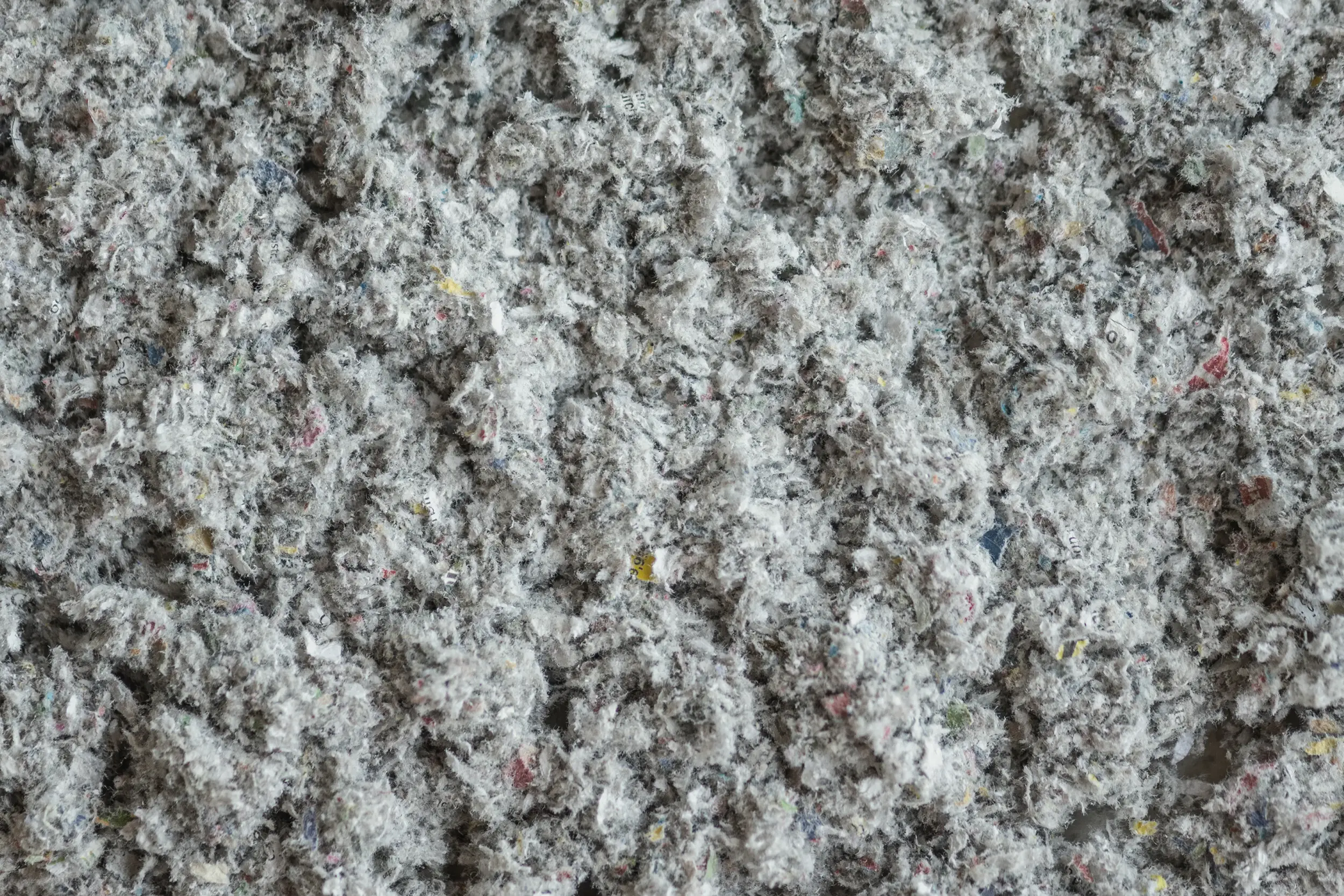
Isofloc
Celulosa insuflada a partir de papel reciclado, fabricada en Alemania y Suiza.

Plantd
Paneles estructurales de hierba perenne que almacenan carbono, ya en viviendas de D.R. Horton.

Termofloc España
División española de Thermofloc: aislante de celulosa insuflada, certificado natureplus.

Wood Tube
Tubos estructurales de papel reciclado suecos, reducen emisiones CO2 hasta 92% vs acero tradicional.